
For decades, trailer electronics were limited to the basics: blinkers, brake lights, and the occasional electric brake controller. But in 2026, the “dumb” trailer is becoming a thing of the past.
Whether you’re navigating a tight Melbourne driveway or hauling a Heavy Duty Tandem on the open road, adding a “digital eye” and smart sensors can be the difference between a smooth trip and a costly insurance claim.
1. The Reverse Camera Revolution: Wired vs. Wireless
Reversing a trailer is the #1 cause of minor property damage in the towing world. A camera is no longer a luxury—it’s a necessity.
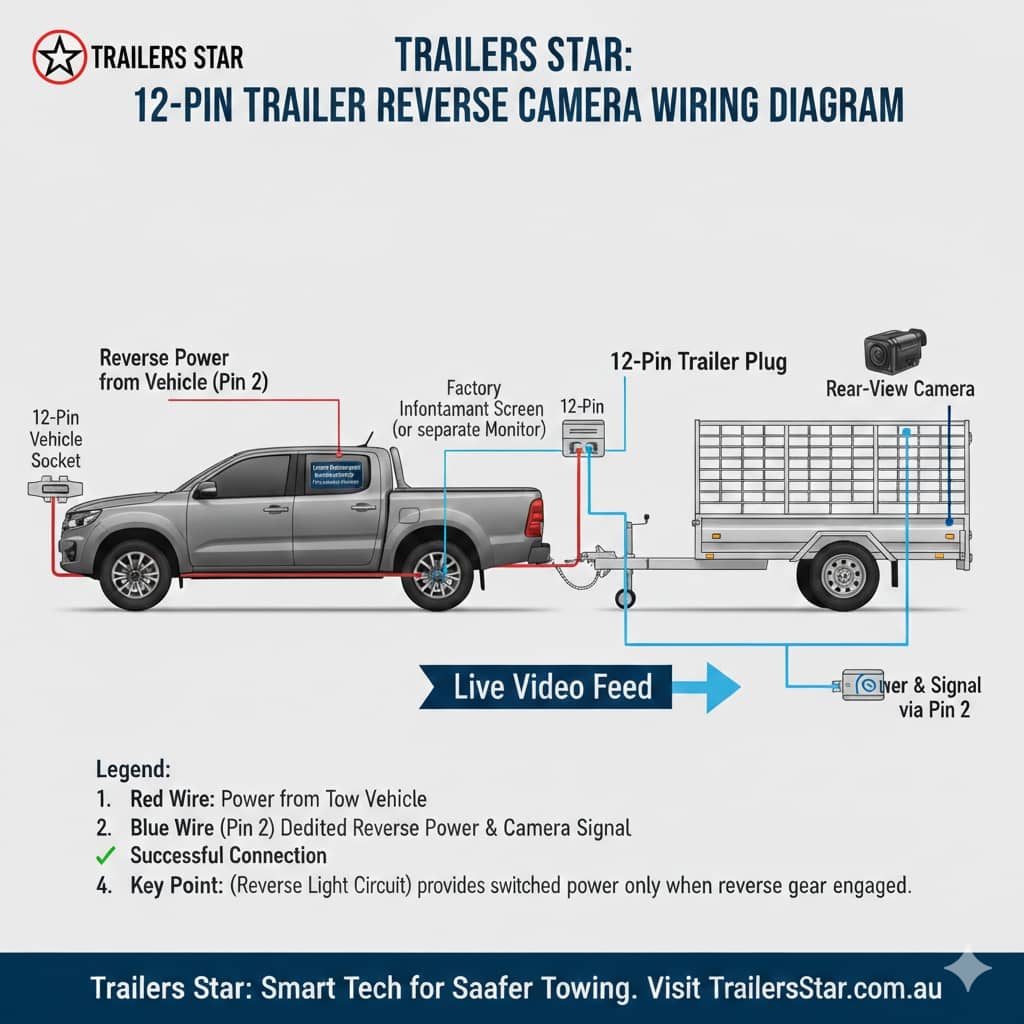
- The Wired Approach: Signal is sent via a heavy-duty cable (often integrated into a 12-pin plug).
- Pro: Zero lag and zero interference.
- Con: Difficult DIY installation; requires “patching” into the tow vehicle’s wiring.
- The Wireless Approach (Most Popular): Digital wireless systems use 2.4GHz signals to send video to a monitor on your dash.
- The Interference Problem: High-sided metal Van Trailers can act as a “Faraday Cage,” blocking the signal between the camera and the cab.
- The Solution: Look for systems with an external antenna or a signal booster mounted on the trailer’s A-frame to bypass the metal body.
Pro Tip: Many modern Victorian Utes (like the Ranger or Hilux) allow for “Third Party Camera” integration, meaning you can view your trailer’s feed directly on your factory infotainment screen using a specialized interface module.
2. Wireless TPMS: Your Early Warning System
A blowout on a tandem trailer can go unnoticed for kilometres until the rim is destroyed or a fire starts. A Trailer Tyre Pressure Monitoring System (TPMS) is a lifesaver.
- How it works: Sensors replace your valve caps and transmit pressure and temperature data wirelessly.
- Why Temperature Matters: Often, a bearing failure generates heat before the tyre loses air. A high-temperature alert on your monitor gives you those precious minutes to pull over before a catastrophic hub failure occurs.
3. The 7-Pin to 12-Pin Upgrade
If you want to run a camera, internal trailer lights, or a fridge while driving, your standard 7-pin plug won’t cut it.
- The 12-Pin Advantage: The extra 5 pins are larger and designed for high-current applications (like charging your Camping Trailer’s battery).
- Compatibility: A 12-pin car socket can still accept a 7-pin trailer plug, making it the most versatile upgrade for any Victorian tradie.
4. Smart Tech: The Rise of the “Smart Lock”
Trailer theft is a major issue in suburban Melbourne. Standard padlocks are easily defeated by cordless angle grinders.
- Bluetooth Smart Locks: These heavy-duty coupling locks connect to your phone.
- Features: They can send an alert to your smartphone if the trailer is moved or tampered with (via built-in accelerometers). Some even feature GPS tracking hidden inside the lock housing, allowing you to track your Trailers Star Box Trailer in real-time if the unthinkable happens.
Summary: Future-Proofing Your Rig
Upgrading your electronics isn’t just about “gadgets”—it’s about reducing stress. Being able to see behind you and knowing your tyre pressures are stable allows you to focus on the road.
Ready to get wired? From LED light upgrades to heavy-duty wiring harnesses, Trailers Star provides the foundations for a modern, safe towing setup. Visit us in-store to see how we can integrate these technologies into your new trailer build.