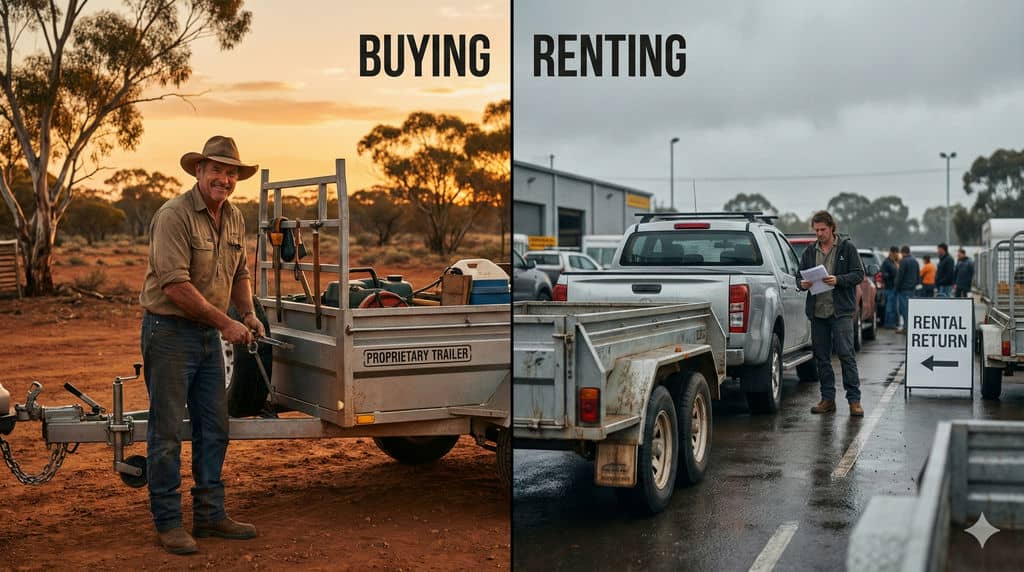
Renting tools and equipment is common in Australia—especially for tradies (sparkies, plumbers, chippies, builders) and farmers who need gear like trailers, generators, welders, earthmoving attachments, spray units, fencing tools, or concrete equipment.
Hiring can feel easy at the start: low upfront cost, “use it and return it.” But once your work becomes steady, the hidden costs of renting grow fast—repeat hire fees, peak-season shortages, time wasted collecting and returning gear, and inconsistent equipment condition that can slow jobs down or cause rework.
Below is a practical, business-minded breakdown of why, in many cases, buying makes more sense than renting for Australian tradies and farmers.
1) Total Cost of Ownership (TCO): Hire Fees Keep Going, Ownership Has a Ceiling
The biggest issue with renting is simple: the money is gone every time you hire. You’re paying for temporary access—not building an asset.
For equipment you use regularly, the total you spend on hire over 12–24 months often creeps past the purchase price (especially once you include delivery, pickup, and extra-day fees).
Rule of thumb
- If you use a piece of equipment 2–4 times per month or more, and you’re likely to need it over the next 12–24 months, buying is usually better value.
- Always include the “operational costs” of hiring: transport, time, delays, and admin.
2) Peak-Season Availability: When You Need It Most, It’s Often Unavailable
Tradies hit peak periods during building and renovation surges. Farmers have narrow seasonal windows—seeding, harvesting, spraying, fencing, irrigation maintenance—where timing matters.
In busy periods, hire businesses often run into:
- Limited stock or only the wrong size/model available
- Long wait times or bookings needed well in advance
- Extra charges or no availability if you need to extend the hire
Owning helps you control the schedule instead of relying on the hire market’s availability.
3) Time Cost: Pickup, Paperwork, Deposits and Disputes All Eat Your Margin
Hiring isn’t just the daily rate. It also commonly includes:
- Driving to collect and return equipment
- Contracts, deposits, insurance add-ons and admin
- Condition checks, photos, and arguments over wear/damage
- Breakdowns that require swaps and waiting on dispatch
For tradies, time is billable. For farmers, time is seasonal opportunity. Either way, wasted hours reduce profit.
4) Consistency and Reliability: One Setup = Fewer Mistakes and Better Output
Hired gear varies in condition. You may get a great unit one time and a tired one the next. Common problems include:
- Inconsistent performance due to wear
- Missing accessories or incompatible fittings
- No control over maintenance standards
- Relearning different brands/models each time
When you own the equipment, you can standardise your setup and maintenance—leading to more predictable performance and fewer job delays.
5) Customisation and Efficiency: You Can Actually Optimise Your Workflow
Tradie jobs and farm operations are highly specific: terrain, site access, transport constraints, safety requirements, and personal workflow all differ.
Hire equipment is usually “generic.” Ownership allows you to:
- Upgrade parts that improve speed and durability
- Set up quick-connect systems and consistent fittings
- Build a repeatable, standard operating process for your team
- Keep the exact accessories you need ready to go
6) Resale Value: Buying Isn’t Just Cost—It’s an Asset You Can Sell
Many types of equipment hold value well in Australia, particularly reputable brands in good condition with accessories and service records.
Owning means you can:
- Sell later to recover capital
- Upgrade when your work changes
- Treat gear as a business asset rather than a pure expense
Renting has no residual value—once the hire is over, it’s gone.
7) Cash Flow and Finance: Buying Doesn’t Always Mean a Big Cash Hit
A common reason people keep renting is fear of a big upfront spend. But buying doesn’t always mean paying in full.
Depending on your situation, options can include:
- Equipment finance / repayments aligned to cash flow
- Structured repayments that match seasonal income patterns
- Using increased productivity to offset repayments
The key is comparing weekly/monthly productivity gains and saved hire spend against repayments, rather than only comparing sticker prices.
Tax treatment varies by business structure and individual circumstances. Speak with your accountant to confirm the best approach for your setup.
8) When Renting Still Makes Sense (Don’t Be Dogmatic)
Buying isn’t always the right move. Renting can be smarter when:
- You only need it once or very rarely
- You’re testing a tool before committing
- It’s highly specialised, very expensive gear with short use windows
- You need a temporary backup in an emergency
A practical strategy is:
Buy your high-frequency core gear, rent low-frequency specialised equipment.
A 3-Minute Decision Checklist: Should You Buy or Rent?
Ask yourself these six questions:
- Will I use it multiple times over the next 12–24 months?
- Will lack of availability in peak season cost me jobs or yield?
- Will pickup/return time exceed 1–2 hours per hire?
- Is reliability critical to safety, quality, or deadlines?
- Do I need a consistent setup or custom accessories?
- Can I resell it easily later?
If you answer “yes” to 3 or more, buying is usually the better decision.
FAQ
Q1: Isn’t buying worse for cash flow than renting?
Not always. If you hire frequently, the saved hire spend plus higher productivity can offset repayments. The right decision comes from cash-flow comparison, not just upfront price.
Q2: What should tradies buy first?
Start with high-frequency gear that directly affects job completion speed and scheduling. Rent the rare, highly specialised items.
Q3: Why is buying often better for farmers?
Because farming runs on tight windows. Missing the timing can cost far more than the equipment itself. Owning protects your ability to act when conditions are right.
Q4: How do I reduce the risk of buying the wrong equipment?
Use a “rent-to-try” approach, choose models with strong resale value, and plan your exit (how and where you’ll sell if needs change).
Conclusion: Treat Equipment as Productivity, Not Just a Cost
For many Australian tradies and farmers, equipment ownership isn’t about spending more—it’s about protecting availability, improving reliability, saving time, and increasing profit consistency.
If your work is steady and you’re hiring the same gear repeatedly, buying is often the smarter long-term move.